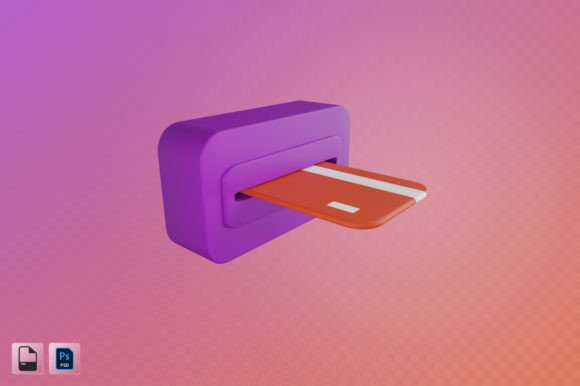
ATM Card 3D Illustration for Design Projects
ATM Card 3D Illustration is a high-quality visual representation of an ATM card created using three-dimensional modeling techniques. These illustrations are commonly used in digital design to showcase the look and feel of a debit or credit card without using real cards, ensuring both aesthetic appeal and security. Whether you're designing a mobile app, website, or marketing material, having access to realistic and customizable 3D ATM card visuals can significantly enhance your work.
Who Benefits from Using ATM Card 3D Illustrations?
The use of ATM Card 3D Illustrations spans across various industries and professions. Here's how different audiences might find them useful:
For Content Creators and Social Media Marketers
If you're a content creator or social media marketer, these illustrations can be powerful tools to grab attention. A well-designed 3D ATM card graphic can serve as a focal point in a post about financial services, fintech innovations, or budgeting tips. You can easily customize the color scheme, text, and layout to match your brand identity, making your message more cohesive and visually appealing.
- Use Case: Promoting a new payment app on Instagram with a stylized 3D ATM card mockup.
- Priorities: Visual appeal, brand consistency, engagement, and shareability.
- Example: Add a transparent background PNG into a Canva template to create a sleek promotional image.
For UI/UX Designers and Web Developers
UI/UX designers often need placeholders for financial elements like cards in their prototypes. An ATM Card 3D Illustration provides a realistic touch without requiring actual card data. It allows for testing layouts, interactions, and animations that involve card interfaces. Additionally, it helps clients visualize final products more clearly during presentations or feedback sessions.
- Use Case: Mocking up a banking app interface with interactive 3D card views.
- Priorities: Realism, scalability, flexibility, and compatibility with design tools.
- Example: Use the PSD file to layer and edit individual elements like the chip, logo, or text.
For Educators and Trainers
Educators teaching design, marketing, or finance may use 3D illustrations to demonstrate concepts such as branding, user experience, or payment systems. The clarity and detail of an ATM Card 3D Illustration make it ideal for classroom materials, online courses, or tutorials. It’s also a great way to explain technical aspects of card design to students who are just starting out.
- Use Case: Creating slides for a lesson on financial product design.
- Priorities: Educational value, clarity, adaptability for print or screen, and accuracy.
- Example: Embed the illustration in a PowerPoint slide to show card anatomy and design principles.
For Entrepreneurs and Small Business Owners
Entrepreneurs launching a financial service or fintech startup need compelling visuals to attract investors or customers. An ATM Card 3D Illustration can help you build professional-looking pitch decks, landing pages, or brochures quickly. Since it comes in high resolution (3000x3000 px), it ensures that your printed or digital materials look sharp and polished on any platform.
- Use Case: Showcasing a new contactless card feature in a product demo video.
- Priorities: Professionalism, speed of production, cost-effectiveness, and commercial viability.
- Example: Place the illustration in a brochure to highlight the benefits of secure, modern payment solutions.
For Hobbyists and Freelancers
Hobbyists and freelancers looking to expand their creative portfolios can benefit from using ATM Card 3D Illustrations in personal projects. They’re perfect for experimenting with lighting, shadows, and perspective to improve your design skills. Plus, the availability of both PNG and PSD formats makes it easy to tweak the design to fit your artistic vision.
- Use Case: Designing a poster for a local bank as a portfolio piece.
- Priorities: Learning value, creativity, customization options, and personal satisfaction.
- Example: Modify the texture and angle of the card in Photoshop to create a unique visual effect.
What Makes This 3D Illustration Stand Out?
When choosing a 3D illustration for your project, several factors come into play. This particular ATM Card 3D Illustration is designed with versatility and quality in mind:
- High Resolution: At 3000x3000 pixels, the illustration maintains crisp details even when scaled up for posters or banners.
- Multiple File Formats: The inclusion of both PNG and PSD files offers flexibility depending on your workflow and editing needs.
- Customization-Friendly: With layers available in the PSD version, you can adjust colors, fonts, and other elements to align with your brand or project theme.
- Ready for Use: The illustration is optimized for immediate integration into web design, app development, and marketing campaigns.
Real-World Applications
Here are some practical scenarios where this illustration could be a game-changer:
- Mobile App Prototyping: Showcase how a virtual card will appear within the app before development begins.
- Web Page Headers: Use the PNG file as a hero image for a page promoting a new financial service.
- Social Media Ads: Highlight key features of a card in a Facebook or LinkedIn ad campaign with eye-catching visuals.
- Product Presentations: Include the illustration in investor or client pitches to present a polished and professional image.
- Print Materials: Incorporate it into flyers, brochures, or posters for events or promotions related to banking or finance.
How to Decide If This Illustration Is Right for You
Not every design element suits all projects. To determine whether the ATM Card 3D Illustration is a good fit for your needs, consider the following:
Beginners: Looking for Simplicity and Clarity
If you're new to design, you’ll appreciate the ease of use provided by ready-to-go assets. This illustration requires no advanced 3D modeling skills — simply import the PNG or PSD file into your preferred tool and start customizing. For those learning Adobe Photoshop, the layered PSD format is especially valuable for understanding composition and design hierarchy.
- Ask yourself: Do I need a quick and clean design asset without complicated setup?
- Match if: You're working on a basic presentation, simple app mockup, or first-time design project.
Professionals: Seeking Quality and Flexibility
Experienced designers and developers likely have specific standards for resolution, format, and usability. This illustration meets those expectations by providing scalable vector-like qualities and editable layers. Professionals can leverage it not only for its realism but also for its adaptability in complex workflows involving animation, responsive design, or multi-platform publishing.
- Ask yourself: Will this asset maintain quality across different platforms and sizes?
- Match if: You're creating a professional-grade application or preparing a detailed marketing campaign.
Businesses: Focused on Brand Consistency and ROI
Small businesses and startups must ensure that their branding remains consistent across all touchpoints. The ability to change colors, logos, and text on the ATM Card 3D Illustration makes it a cost-effective option for maintaining brand alignment. Moreover, high-resolution graphics contribute to a more trustworthy and polished appearance, which can directly impact customer perception and conversion rates.
- Ask yourself: Does my project require a professional and branded visual component?
- Match if: You're launching a new financial product or redesigning your company's digital presence.
Maximizing Your Use of the Illustration
To get the most out of the ATM Card 3D Illustration, consider these best practices based on your goals:
For Speed and Simplicity
If time is a constraint, the PNG file is ideal. It’s plug-and-play and works seamlessly in most design software. Just place it in your layout and you’re done — no need to adjust layers or settings.
For Customization and Depth
If you want to fine-tune the design, the PSD file gives you full control. You can replace the card’s background, add your logo, or simulate wear and tear for a more authentic look. This is particularly useful for designers aiming to produce unique visuals that stand out in competitive markets.
For Long-Term Projects
Because the illustration is high-resolution and layered, it serves as a reliable asset for long-term use. Whether you’re building a website that will evolve over time or developing a series of marketing materials, you won’t need to source new assets repeatedly.
Where to Use the ATM Card 3D Illustration
This illustration isn't limited to one platform or purpose. Below are common areas where it can shine:
- App Screenshots: Demonstrate card features in your app store listing or demo videos.
- Websites: Use it in banners, infographics, or educational sections explaining payment processes.
- Presentations: Visually support your ideas when discussing financial apps or services.
- Posters: Highlight the benefits of contactless payments or digital wallets in a public display.
- Social Media: Create engaging posts that draw attention to financial offerings or promotions.
Tailoring the Illustration to Different Needs
Depending on your role, the way you use the illustration may vary:
- Marketers: Focus on adding your brand’s color palette and messaging to reinforce identity.
- Developers: Use the illustration to test UI interactions, such as card swiping or rotating effects.
- Bloggers: Incorporate it into articles or guides about online payments or financial literacy.
- Designers: Experiment with lighting, shadows, and reflections to enhance realism in your compositions.
Conclusion
An ATM Card 3D Illustration is more than just a graphic — it's a versatile tool that can elevate your designs, streamline your workflow, and better communicate your message. Whether you're a beginner needing a straightforward asset or a seasoned designer seeking depth and customization, this illustration caters to a wide range of needs. By considering your specific goals and audience, you can determine how best to integrate it into your next project and achieve impactful results.